
Surplus Funds Recovery for Former Property Owners and Heirs
If a property was sold through certain foreclosure or tax-sale processes, proceeds may remain after legally required debts, taxes, costs and claims are satisfied. Depending on state law and the type of sale, some of those funds may be available to eligible former owners, heirs, estates, lienholders or other entitled parties.
Check a Property Sale
Start with property or record-holder details
Thank you, your review request is in
We will check the available public records and contact you with what we find. For anything urgent, call 408 900 9423.
We examine court and county books to identify if surplus funds exist.
Audits performed across all 50 states and municipal court jurisdictions.
Procedures, deadlines, and requirements vary significantly by locale.
Payout depends on lien priorities, statutory rules, and holding authorities.
What Are Foreclosure Surplus Funds?
Surplus funds can arise when a foreclosure sale produces proceeds beyond amounts legally required to satisfy the applicable debt, costs, liens, and other claims. Depending on the jurisdiction and sale type, remaining funds may be held by a court registry, sheriff, county treasurer, clerk, or designated trustee.
"Who may receive remaining funds depends entirely on applicable statutory law, probate records, and the established priority of claims."
Subject to junior lienholder satisfaction, secondary encumbrances, and verified claim filings.
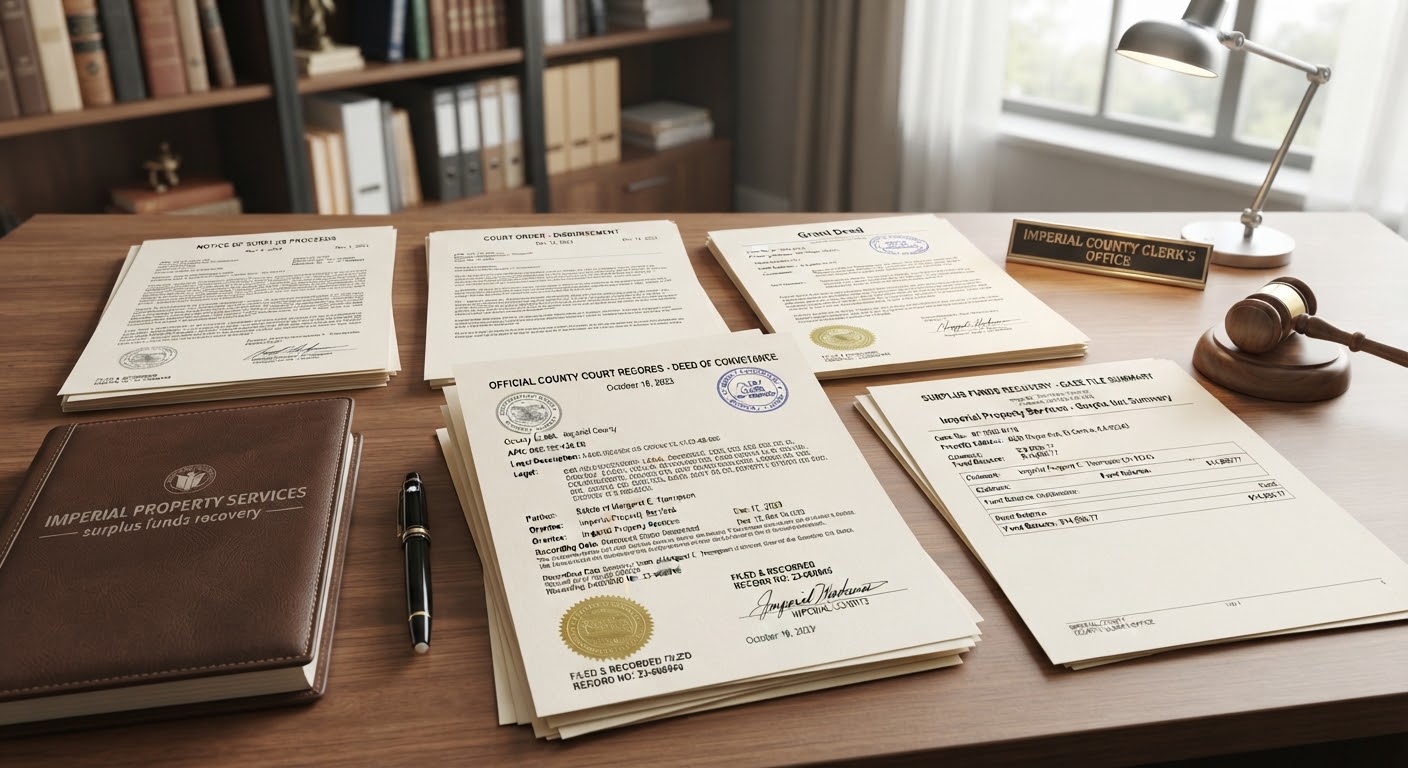
Real property auctions frequently yield sums surpassing outstanding ad valorem tax liens.
What Are Tax Sale Excess Proceeds?
When a tax-defaulted property is sold at municipal auction for more than the delinquent taxes, penalties, statutory advertising costs, and associated collection fees, the remaining balance is commonly labeled excess proceeds, surplus funds, or tax overages.
Tyler v. Hennepin County (2023)
In Tyler v. Hennepin County, the U.S. Supreme Court affirmed that local governments cannot retain property value or auction proceeds beyond the actual tax debt, statutory penalties, and collection expenses without just compensation. While state procedures for claiming funds vary, this landmark decision solidified rights to post-sale equity.
Who May Have a Right to Surplus Funds?
Entitlement to excess sale capital follows established state statutory priority schedules.
Former Record Owner
The legal deed title holder at the exact timestamp when the trustee or tax foreclosure sale concluded.
Surviving Heirs
Lawful descendants or family members entitled under intestate succession laws when an owner passes without a will.
Legal Estates
Formally opened estates represented by court-authorized administrators or executors holding valid letters of authority.
Junior Lienholders
Secondary mortgage lenders, HOA judgment entities, or contractors with recorded liens senior to former owner distribution.
Trusts & Assignees
Beneficiaries of living trusts, designated legal assignees, or conservatorship representatives designated by court order.
Institutional Standard: Eligibility and payout priority depend on state statutes, junior encumbrance filings, and probate status. We review every situation independently without making assumptions.
How Surplus Funds Recovery Works
A rigorous four-phase administrative and legal roadmap designed for audit compliance.
Free Case Review
We review available county registry records, auction bid sheets, and court docket entries to establish whether surplus funds were generated and currently sit uncollected.
Verify Potential Claim
Our audit team calculates the net surplus after primary judgment costs, verifies all active subordinate encumbrances, and checks current jurisdictional claim deadlines.
Prepare Claim Package
We assemble required state-specific affidavits, probate declarations, notarized certificates, and coordinate with licensed local counsel whenever mandatory.
Claim Resolution
The court, county treasurer, or holding trustee audits the petition and orders payout. Any agreed service fee is strictly governed by the written agreement and statutory caps.
The Same Asset Type May Have Different Names
Depending on whether your foreclosure was judicial, non-judicial, or handled by a county tax assessor, official legal notices use distinct terminology.
Most commonly encountered in standard mortgage foreclosure sales, trustee sales, and judicial auctions managed through court registries.
Standard statutory phrasing utilized by county tax collectors, county treasurers, and municipal land registries in tax deed liquidations.
Widely used real estate industry nomenclature describing residual proceeds generated when bid amounts top baseline opening credit bids.
The codified statutory language designated in several state statutes (such as Georgia, Florida, and Texas) governing county auction balances.
Rules Differ Drastically by State and County
Surplus fund claims are governed by local statutes rather than a single uniform national code. Rules dictate strictly enforced claim deadlines, notarized verification requirements, heirship certifications, and fee regulation limits.
You May Be Able to File the Claim Yourself
In many situations, an eligible claimant can contact the court clerk, county treasurer, or trustee directly and submit required documentation without hiring a recovery service. Imperial Property Services provides specialized administrative research, heir locating, document coordination, and attorney liaison services for clients who desire end-to-end representation.
You submit motions or claim forms directly to the holding agency. You manage required title searches, probate certifications, and court calendar hearings at your own pace.
We coordinate comprehensive lien research, engage licensed local legal counsel when required, compile necessary heirship affidavits, and manage court hearings without upfront charges.
What If the Former Owner Has Passed Away?
When a prior property owner is deceased, lawful heirs or the personal representative of an estate may retain rights to unclaimed sale proceeds under state intestate or probate laws.
* Requirements depend significantly on state probate thresholds and intestate succession codes.
Review an Heir ClaimDocuments That May Be Needed
Preparing an institutional claim petition requires accurate legal identification and proof of entitlement.
Government Photo ID
Unexpired State Driver's License or U.S. Passport for verified claimant authentication.
Proof of Prior Ownership
Recorded grant deed, warranty deed, title policy, or historical tax parcel assessments.
Foreclosure or Tax Sale Notice
Notice of Trustee's Sale, Sheriff's Certificate, or Tax Collector's Auction deed copy.
County Sale Records
Auditor's return of sale, certificate of disbursements, or registry deposit records.
Notarized Claim Verification
Formal sworn affidavit executed before an authorized notary public as required by court rule.
IRS Form W-9
Taxpayer Identification Form required by treasurers for disbursement compliance.
Note: This list is illustrative. Exact documentation is dictated by county court local procedures.
Why Some Surplus Claims Take Longer
While simple claims can conclude smoothly, multiple legal complexities can extend timelines.
Coordinating documents, waivers, and proportional shares among distant siblings, heirs, or cross-country descendants.
Absence of formally issued court letters of administration or unresolved disputes among statutory beneficiaries.
Second mortgages, credit line holders, or tax authorities asserting prior rights against the court deposit.
Name variations, unrecorded maiden names, or discrepancies between driver licenses and historic deeds.
Historical documents requiring archival requests, vital statistic certifications, or specialized title searches.
County auditor staffing limits, judicial calendar delays, or lengthy statutory advertising notice periods.
Clear Fee Terms Before You Decide
If Imperial Property Services assists with a claim, all terms are established in a clear written agreement prior to commencing work. Fees strictly follow state law and statutory recovery limits. No individual is obligated to utilize a private service.
Clear Written Contract
Scope of work, duties, and terms defined in transparent language without obscure clauses or unexpected obligations.
Performance Basis
No upfront payments for our research. Recovery fees apply solely if funds are legally disbursed by the holding authority.
Strict Statutory Caps
We adhere to all state-mandated fee ceilings, solicitor registration mandates, and fiduciary guidelines nationwide.
Be Careful With Surplus Funds Solicitations
The surplus recovery sector attracts aggressive operators. Review the warning signs before signing agreements or sharing sensitive identification:
Upfront Fee Demands
Never pay out-of-pocket deposits or evaluation retainers to explore potential funds.
High-Pressure Deadlines
Claims do have statutory limits, but honest practitioners allow time to review documents.
Vague Sale Details
A credible firm will identify the property address, county jurisdiction, and sale docket.
Deed Transfer Demands
Do not sign grant deeds over other properties. Recovery requires claim documents only.
Broad Power of Attorney
Refuse universal POA requests; authorizations should be strictly limited to the surplus claim.
Banking Credential Requests
Holding authorities issue official warrants or checks directly; logins are never needed.
A Transparent Approach to Surplus Recovery
Research First
We confirm the viability of proceeds and review junior lien priority before recommending formal action.
State-Specific
Claims are processed in strict compliance with the relevant county court, sheriff, or tax collector rules.
Clear Documentation
Plain-English agreements outlining service scope, claimant rights, and applicable fee structures.
Zero Pressure
You decide whether to proceed after reviewing our initial audit findings. No sales pressure.

"When someone learns that money may be held from a past property sale, the process can be confusing and overwhelming. Our responsibility is to explain the situation clearly, identify the applicable process, and ensure property owners or heirs understand every option available to them."
Surplus Funds Recovery Answers
How do I find out if surplus funds exist from my property sale?expand_more
Does the former owner always receive all of the excess money?expand_more
What rights do heirs have if the former owner passed away?expand_more
Is there a deadline to claim surplus or excess proceeds?expand_more
Can I file a claim myself without using a company?expand_more
Do I have to pay anything upfront for your review?expand_more
What happens if the property had multiple owners?expand_more
How long does the recovery process take?expand_more
What happens if an old mortgage or debt collector files a claim?expand_more
Is Imperial Property Services a law firm?expand_more
Useful Public Resources
Independent portals and official repositories where property records and unclaimed funds can be inspected.
Check municipal tax deed overage schedules and public auction lists.
Inspect judicial foreclosure registries and certificates of disbursement.
National Association of Unclaimed Property Administrators database.
U.S. Supreme Court docket review regarding surplus equity protections.
Want to Know Whether Funds May Exist From a Prior Property Sale?
Provide the former owner's name and property details. We will check available public records and outline your options.